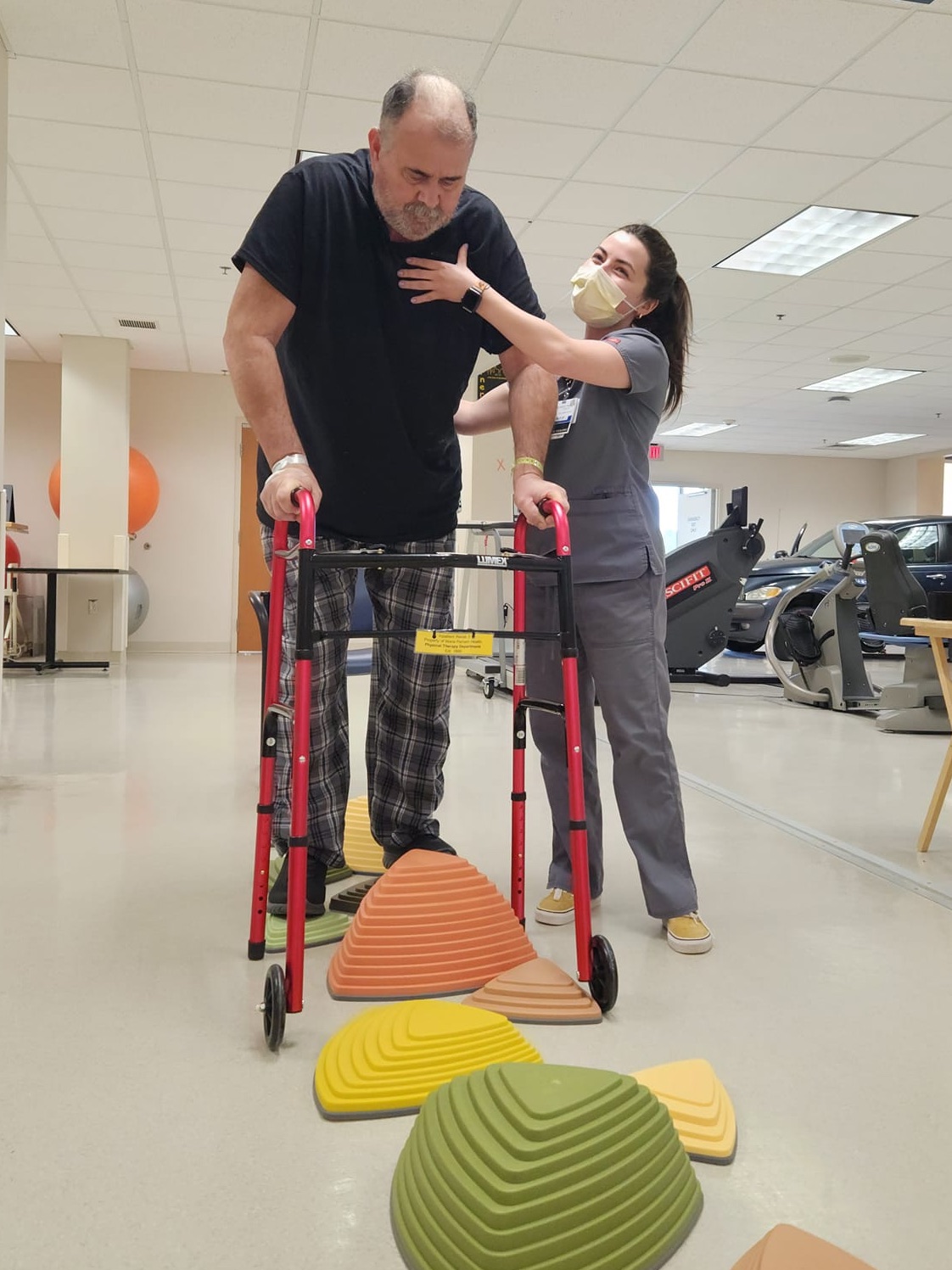
Inpatient Rehabilitation
Our 11-bed inpatient rehabilitation unit offers tailored services to help patients recover after a hospital stay due to an illness or injury. Patients admitted to our acute rehabilitation unit (ARU) receive individualized therapy aimed at maximizing their physical, cognitive, emotional, psychological and social function with a goal of returning home.
What Do You Treat?
The team of experienced rehabilitation care coordinators help patients maximize their functional goals. We provide the highest level of post-acute medical care while sustaining a caring and culturally sensitive environment.
Unlike Skilled Nursing Facilities, where doctor visits are only required once every 18 days and LPNs provide most of the care, the Maria Parham Center for Rehabilitation has daily doctor visits. It is staffed with registered nurses 24 hours a day, seven days a week. Our staffing ratio is one RN to every five to a maximum of six patients. Each patient at Maria Parham Center for Rehabilitation receives between 900 and 1,080 minutes of therapy a week, more than three times what Skilled Nursing Facilities require. And, because of its location at Maria Parham Health, all labs, X-rays, dialysis, respiratory treatments and pharmacy needs are met on-site.
We are devoted to the rehabilitation of patients with various disorders and conditions, including:
- Amputations
- Brain injury
- Cardiac events
- Hip fractures
- Musculoskeletal conditions
- Neurological disorders
- On-site dialysis
- On-site laboratory
- On-site pharmacy
- On-site radiology
- Organ failure recovery
- Orthopedic surgeries
- Registered dietitian
- Spinal cord injury
- Stroke
- Other disabling conditions
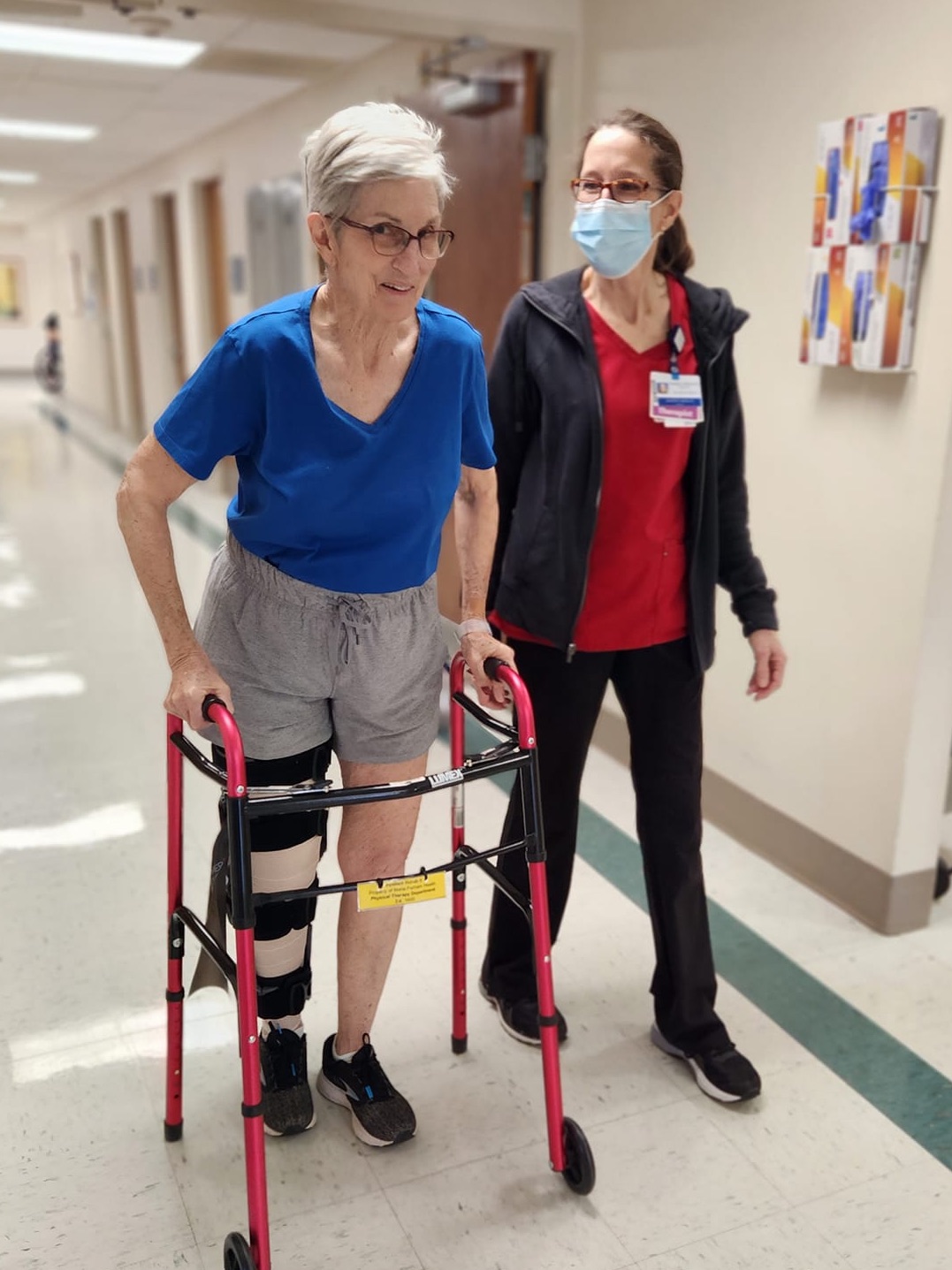
What Can I Expect?
Our goal is to help patients regain independence as quickly and safely as possible. Patients will receive focused and intensive therapy sessions three hours per day, five days per week, to improve strength, endurance, motor control and stability. That means patients might spend time walking, getting out of bed, cooking, tying shoes, buttoning buttons or practicing any skills that need to be mastered again.
Key features that set inpatient rehabilitation units apart from other care settings:
- Daily access to a physician specially trained in rehab
- Dedicated training areas (gym, kitchen, dining room and transition suite)
- Individualized therapy for faster return home
- Low patient-to-nurse ratio (typically 5 – 7 patients per rehab nurse)
- Private patient rooms are available
- Three hours of therapy a day, five to seven days a week
- Three-day stay at a short-term acute care hospital not required for transfer to an inpatient rehabilitation hospital
- Transition suite (a mini apartment for use in training caregivers and patients)